Work & rescue
Ambulance Boats
On a river island or a char, the nearest hospital may be an hour of water away. An ambulance boat is built around one question: can a stretcher get aboard, and can the patient be treated while she runs?
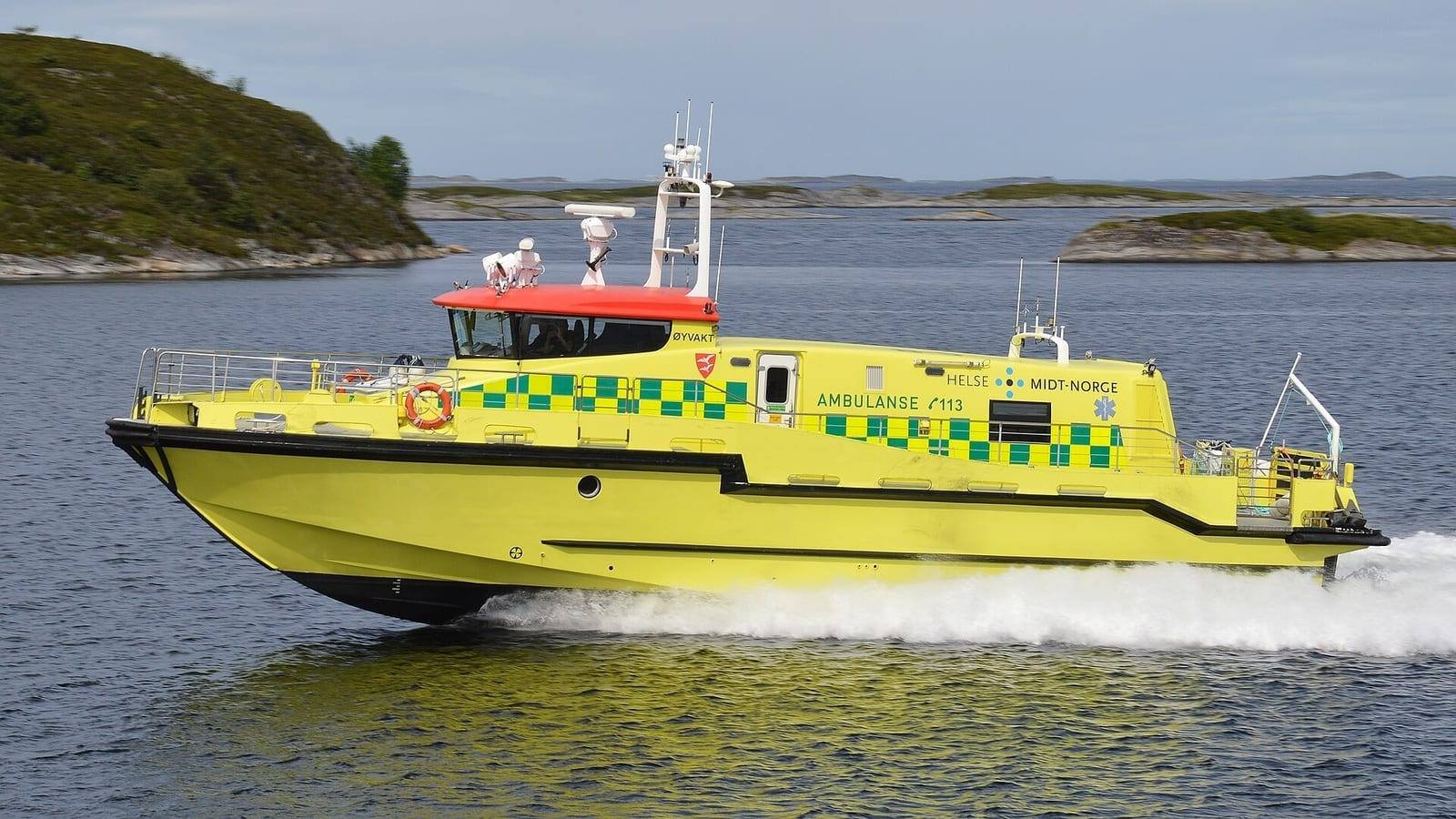
That means a door and a deck a stretcher can actually pass through, at whatever height the bank happens to be, with two people carrying it. It is a simple requirement and it fixes most of the hull above the waterline.
Inside, the treatment space needs light, power, oxygen stowage and room to stand beside the patient. And because a patient in a hurry is a patient being carried at speed, the ride matters medically, not just as comfort — the hull is chosen so the crew can keep working while she is under way.
What shapes the design
Stretcher access
A door, deck and route two people can carry a loaded stretcher through, from a bank at any height.
Treatment space
Standing room beside the patient, with light, power and secure stowage for oxygen and equipment.
Ride under way
A hull that stays workable at speed, so treatment does not stop for the passage.
Ready at any hour
Starting, lighting and mooring arranged for a crew turning out at night in a hurry.
Indicative figures
The usual envelope.
Ranges, not a specification. A ambulance boat is sized by the channel she runs in and what she has to carry — these are simply where vessels of this kind tend to fall on an inland route.
- Length overall
- 9 – 15 m
- Beam
- 3 – 4.2 m
- Loaded draught
- 0.6 – 1.0 m
- Capacity
- 1 – 2 stretchers, 4 – 8 seated
- Hull
- FRP or marine-grade aluminium
- Service speed
- 18 – 28 knots, by fit-out
Where she earns her keep.
- River island and char communities with no road link
- District health services covering a riverine block
- Patient transfer between a remote clinic and a town hospital
- Medical cover for works and events on the water