Work & rescue
Search and Rescue Boats
A rescue boat is designed for the worst day of the year. She launches when other craft are already alongside, and she has to come back with more people aboard than she left with.
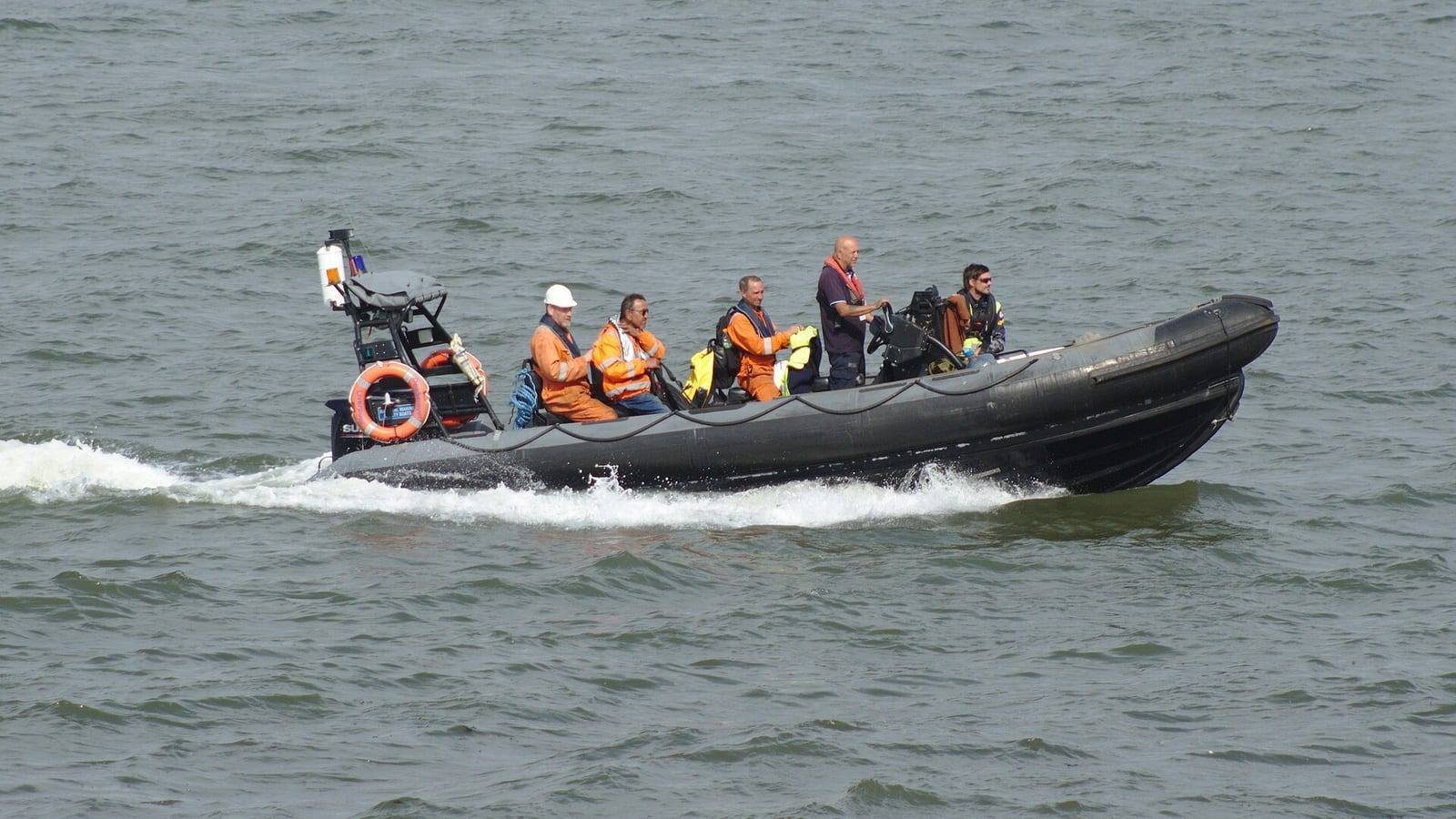
Recovery drives the design. Getting someone out of the water and over the side is difficult, slow and dangerous, so freeboard, a recovery point and a deck that can be worked on while she moves are settled before anything else. A boat that gets there fast and cannot lift anyone has not helped.
Then: reserve buoyancy, self-draining deck, a hull that takes a knock against debris or another vessel, and a crew position where the helmsman can see and hold on at the same time. Simple, strong and forgiving beats fast and fine.
What shapes the design
Recovery over the side
Freeboard, recovery point and deck arranged for lifting a person aboard under way.
Reserve buoyancy
Built to stay afloat and usable when swamped, with a self-draining deck.
Taking a knock
Fendering and structure that survive contact with debris, a bank, or another vessel.
Crew position
A helm where the crew can see out, hold on and work, in the conditions she launches into.
Indicative figures
The usual envelope.
Ranges, not a specification. A search and rescue boat is sized by the channel she runs in and what she has to carry — these are simply where vessels of this kind tend to fall on an inland route.
- Length overall
- 8 – 14 m
- Beam
- 2.8 – 4 m
- Loaded draught
- 0.5 – 0.9 m
- Crew and survivors
- 4 – 10, plus recovered
- Hull
- Aluminium or FRP, foam collar option
- Service speed
- 25 – 35 knots, by fit-out
Where she earns her keep.
- Flood response across a riverine district
- Standby cover for ferry and cruise routes
- Disaster response and evacuation
- Safety cover for works, regattas and river events