
Passenger & transport
Ferry Boats
A ferry is judged on turnaround, not on top speed. She has to load, cross, unload and go back — twenty times a day, on a bank that may be mud in April and two metres higher in August.
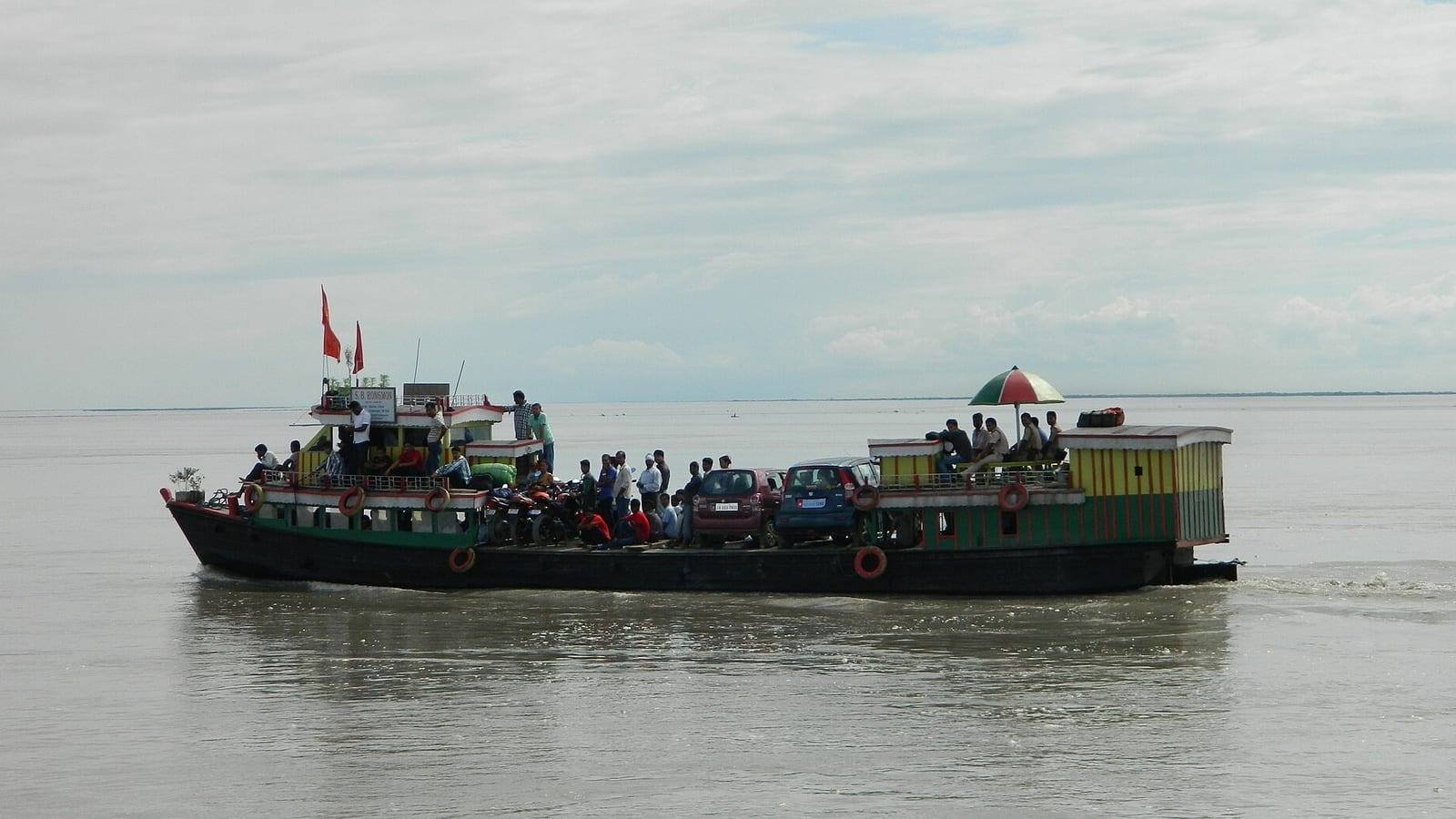
Almost everything about a river ferry follows from the landing. If passengers walk on over a plank from a shelving bank, the bow and the deck height are shaped around that. If there is a proper ghat with a ramp, she can be built quite differently. We start from where she will tie up, in both seasons, before anything else is drawn.
The second constraint is draught. The Brahmaputra moves its channels between monsoons, and a hull that needs a metre and a half of water for half the year is a hull that stops earning. Shallow draught, protected propellers and enough power to hold station in the current are worth more on a river crossing than fine lines.
What shapes the design
Loading and turnaround
Where the gangway lands, how wide the walkway is, and whether motorcycles and handcarts come aboard alongside people.
Draught and the low season
Built to keep running when the channel drops, with running gear tucked up clear of the bottom.
Shade and weather
A covered deck that works in May heat and in monsoon rain, without closing the boat in.
Life-saving arrangement
Buoyant apparatus, jackets and clear routes to the side, laid out for the number actually carried.
Indicative figures
The usual envelope.
Ranges, not a specification. A ferry boat is sized by the channel she runs in and what she has to carry — these are simply where vessels of this kind tend to fall on an inland route.
- Length overall
- 15 – 32 m
- Beam
- 5 – 8 m
- Loaded draught
- 0.9 – 1.5 m
- Passengers
- 50 – 200
- Hull
- Welded mild steel
- Propulsion
- Single or twin marine diesel
Where she earns her keep.
- Bank-to-bank crossings where the nearest bridge is an hour away
- Island and char connections on the Brahmaputra
- Commuter services into Guwahati
- Market-day services carrying people, produce and two-wheelers together