
Work & rescue
Self-Propelled Barges
A self-propelled barge carries her own engines, so she does not wait for a tug. On an inland waterway that usually makes her the cheapest way to move bulk over any real distance.
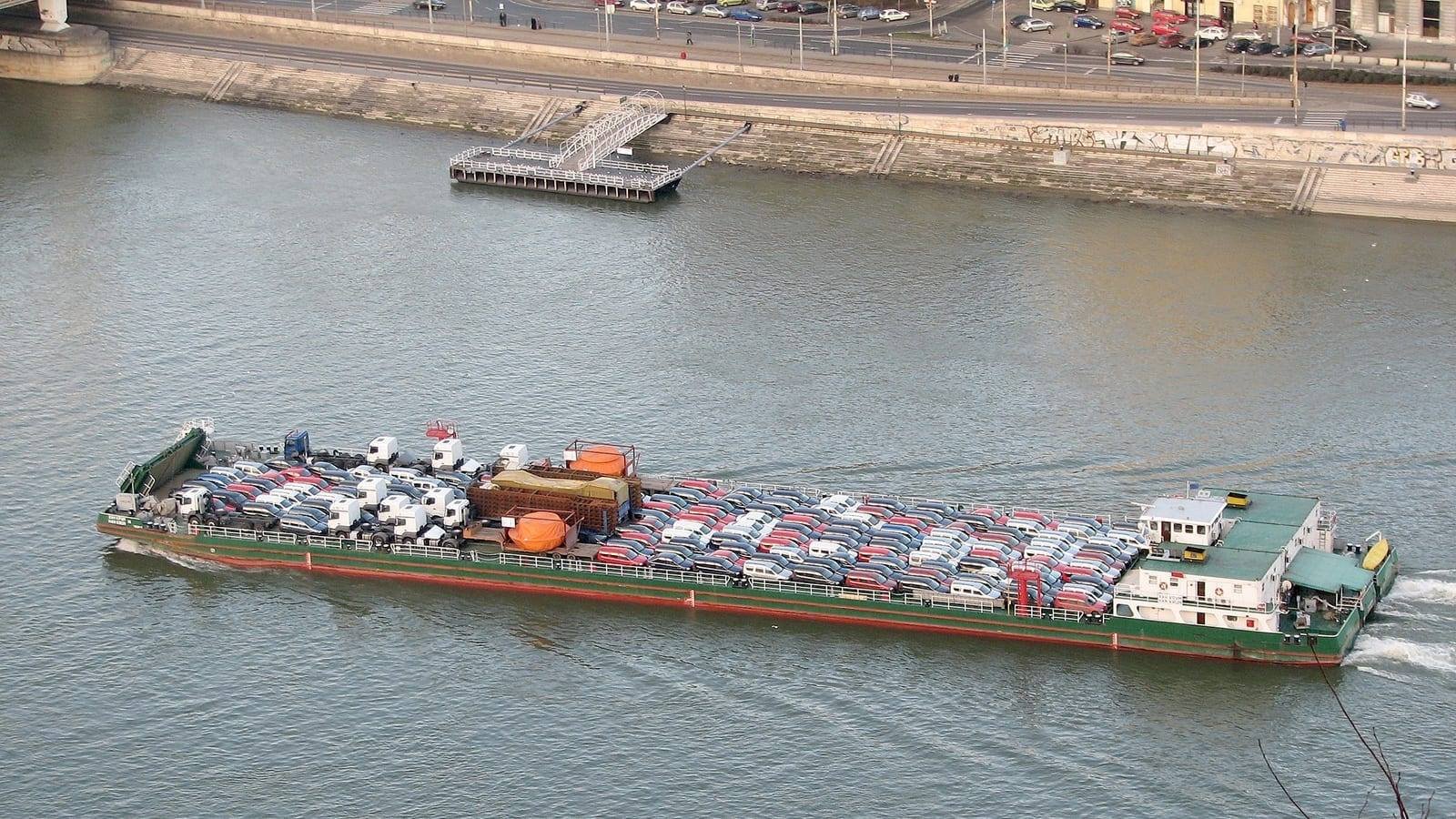
The design question is always the same: how much can she carry and still float over the shallowest point on the route, in the worst month. Deadweight and draught are traded against each other, and the answer depends entirely on the river rather than on any general rule.
After that it is about the cargo. Bulk, break-bulk, containers, vehicles and project loads each want a different hatch arrangement, deck strength and access — and they want different things again at the loading point, which is often a bank rather than a quay.
What shapes the design
Deadweight against draught
Capacity set by the shallowest point on the route in the driest month, not by the hull.
Hold and hatch arrangement
Sized around the actual cargo — bulk, boxes, vehicles or a single project load.
Loading where there is no quay
Deck strength, access and ramps arranged for the bank the cargo actually comes off.
Handling loaded
Power and steering enough to hold her in a current with a full hold.
Indicative figures
The usual envelope.
Ranges, not a specification. A self-propelled barge is sized by the channel she runs in and what she has to carry — these are simply where vessels of this kind tend to fall on an inland route.
- Length overall
- 40 – 75 m
- Beam
- 10 – 15 m
- Loaded draught
- 1.5 – 2.5 m
- Deadweight
- 500 – 2,000 t
- Hull
- Welded mild steel
- Propulsion
- Twin marine diesel
Where she earns her keep.
- Bulk cargo along the Brahmaputra and Barak
- Construction materials to sites with no road access
- Over-dimensional and project loads
- Container movement on inland waterway routes